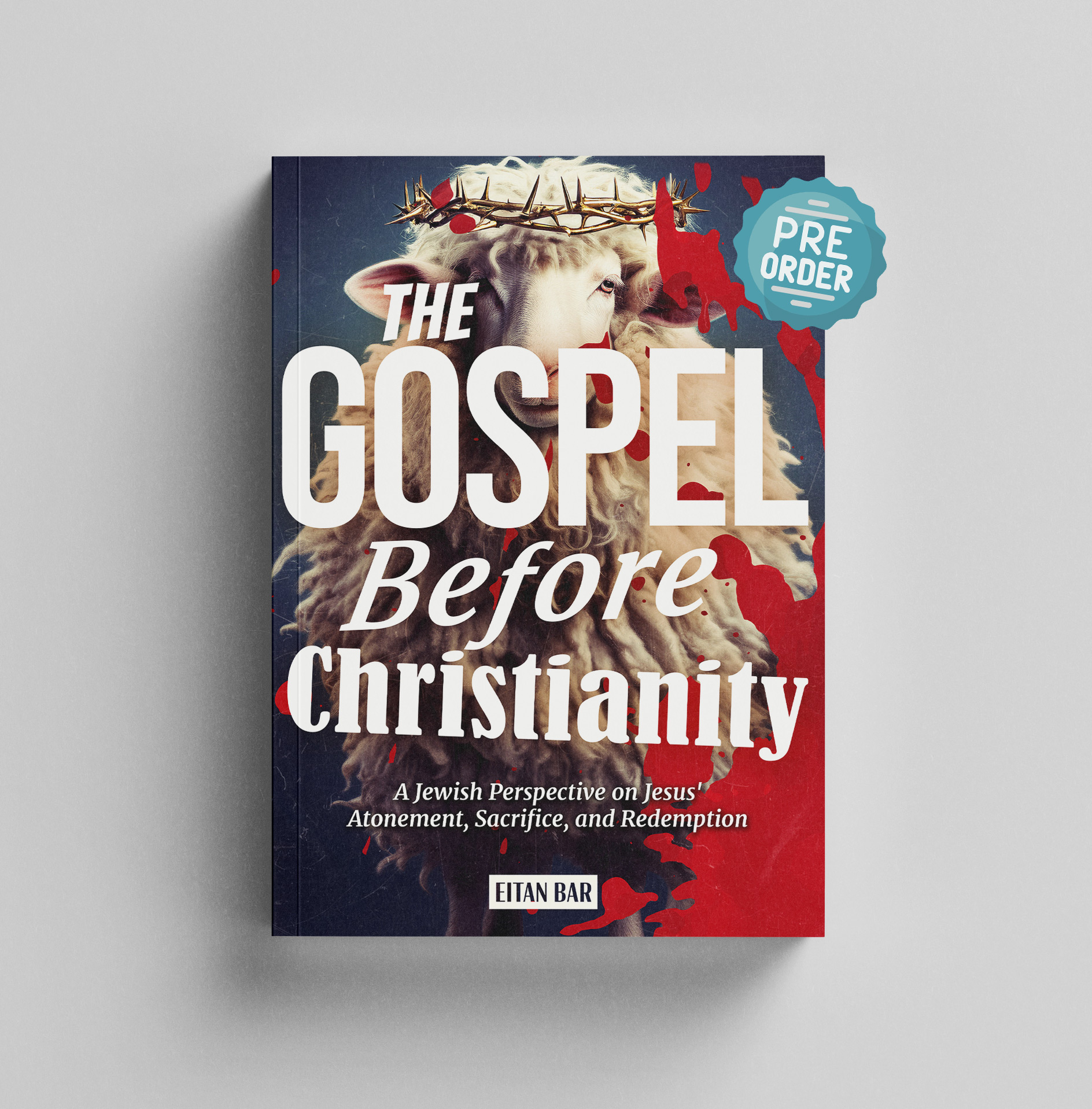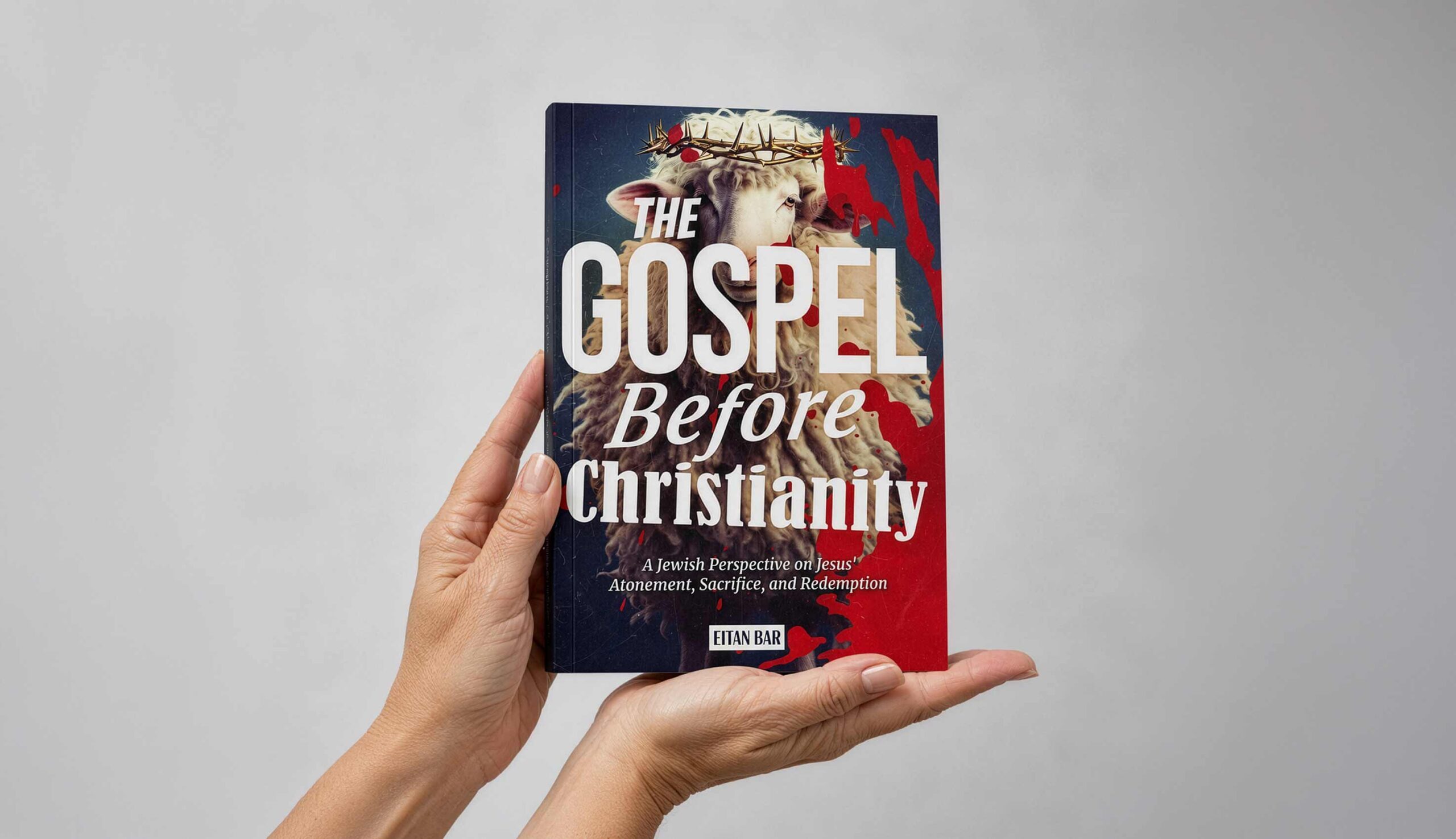
A review of The Gospel Before Christianity: A Jewish Perspective on Jesus’ Atonement, Sacrifice, and Redemption by Dr. Eitan Bar (2026, 410 pages).
Every so often a book comes along that does not simply add another opinion to a crowded shelf, but quietly removes the furniture you had been tripping over for years. The Gospel Before Christianity is that kind of book. Dr. Eitan Bar has written what may be the most accessible and most disarming case yet for reading the gospel the way its first hearers actually heard it, in Hebrew categories, in Jewish idiom, in the world that produced Yeshua rather than the world that later inherited Him.
Eitan Bar is one of the leading voices in Christian universalism, and this book shows exactly why. He does not arrive at a wider hope by softening Scripture. He arrives there by reading it more closely than most of us were ever taught to.
The Premise: The Gospel Had a Native Language, and We Stopped Speaking It
The book opens with a parable about a rabbi who spoke to his village in the language of the soil beneath their feet. He spoke of fire as refining, of blood as life, of judgment as correction, of salvation as rescue in this life, of eternity as fullness rather than endless duration. His words traveled, were translated, were honored, were defended fiercely. And somewhere along the way the lamp was carefully guarded while the oil inside it was quietly replaced.
That parable is the thesis of the entire book, and Bar spends the next four hundred pages proving it with texts rather than feelings. He works through olam and aiōn, through the sacrificial system of Leviticus, through Yom Kippur, through Sheol and Gehenna, through Paul’s “all” passages, and through the long shadow cast by Augustine of Hippo. The argument is cumulative and it is patient. By the halfway point you are not being persuaded so much as you are being handed back something you did not realize had been taken.
The Heart of the Book: Blood Is Life, Not Punishment
If you read only one section, read Part II. Bar’s treatment of atonement is the finest popular-level explanation of biblical sacrifice I have encountered, and it lands with real force.
“Atonement wasn’t received because someone was killed, but because their blood, their life, was given.”
He shows that in Hebrew thought, blood is nefesh, life itself, and that the altar was never a place where an angry deity was talked down from violence. It was a place where life was poured out to cleanse what death had contaminated. Death was the cost of obtaining the blood. It was never the mechanism of atonement.
From there the line he draws is unforgettable: the cross is not a courtroom sentence but a transfusion. “Christ gave His blood, His life, for us.” That single reframing dissolves the pagan storyline that so many of us absorbed without ever examining it, the one where God is furious, someone must be killed, and Jesus steps in to absorb the blow. Bar simply lets Leviticus and the apostles speak for themselves, and the imported story collapses on its own.
His chapter on Yom Kippur is equally strong. The two goats, the purification of the sanctuary, the confronting of Azazel rather than the appeasing of God, the communal rather than private shape of repentance, all of it restores a dimension of the day that Western readers almost never encounter. The observation that biblical teshuvah is almost always plural in the Hebrew is the kind of detail that rearranges a reader’s whole framework in a single sentence.
Where the Book Turns Dangerous, in the Best Sense
Part V, “Rethinking Hell,” is where Bar is at his most courageous. He traces the doctrine of Eternal Conscious Torment back through Augustine’s Neoplatonism, his reliance on Latin rather than Hebrew and Greek, and the mistranslation of Romans 5:12 that became the foundation stone of inherited guilt. The scholarship here is careful, footnoted, and generous to opponents even while it dismantles them.
The chapter titled “God Is Not a Nazi” is, frankly, one of the most morally serious things I have read in a popular theology book. Writing as a Jewish Israeli and a descendant of Holocaust survivors, Bar refuses to let the reader look away from where the doctrine leads. Under the standard framework, the six million murdered are tormented forever alongside the men who murdered them, and a last-second prayer would have spared the murderer alone. He does not shout. He just sets the logic down on the table and lets you look at it.
And then, remarkably, he does not use that moment to score a point. He uses it to describe a justice that actually heals: judgment as fire that purifies, restoration that is costly rather than cheap, grace that is “slow, severe, and purifying.” Nobody strolls into the kingdom here. Everyone who arrives has been undone first. This is not sentimentality dressed up as hope. It is a harder doctrine than the one it replaces, and it is far more beautiful.
The Jewish Lens Is Not a Gimmick
Plenty of books promise “the Jewish roots of the faith” and deliver little more than Hebrew words sprinkled over the same Western framework. This is not that. Bar is explicit that he is not calling anyone back to Torah observance or to a Hebrew Roots movement. He is calling readers to hear Jesus on His own terms, inside the world that formed His vocabulary.
What gives the book unusual weight is his own story. Two decades inside messianic ministries, a doctorate from Dallas Theological Seminary, and the uncomfortable realization that the theology he had been handed was not the faith of Rabbi Yeshua and His Jewish apostles but a later, filtered reinterpretation. His account of why more than ninety-five percent of Israeli Jews who came to faith eventually walked away is worth the price of the book on its own, and it is written with sorrow rather than score-settling.
Style and Readability
At 410 pages with fifty-one short chapters, the book is far easier to read than its size suggests. Bar writes in short paragraphs, plain sentences, and vivid images. He quotes widely and fairly: Tim Mackie, David Bentley Hart, Roger Olson, Ken Wilson, the Interpreter’s Dictionary, Charles Ellicott, and a long line of lexicographers who have been saying quietly for a century what most pulpits never mention. There is a glossary up front, which is a small kindness that pays off repeatedly.
The closing pages move from argument into something closer to benediction. “Christ did not go to the cross to change God’s mind about you. He went to the cross to change your mind about God.” That line alone will preach for years.
Who Should Read It
Read this if you were raised on fear and have never been able to name why the gospel felt like a threat. Read it if you are deconstructing and would rather rebuild than walk away. Read it if you teach, preach, or translate, because the linguistic material here is not optional. Read it if you are Jewish and have always sensed that the Christian gospel, as presented to you, was foreign to your own Scriptures. You were not wrong, and this book explains why.
Read it especially if you disagree. Bar invites the challenge openly, and he has done the homework.
Verdict
The Gospel Before Christianity is Eitan Bar’s most complete and most generous work to date. It is rigorous without being cold, bold without being cruel, and pastoral on every page. It does not ask you to believe less. It asks you to believe something larger, older, and far more coherent than the version most of us inherited.
This is a five-star book and, I suspect, a lasting one.
The Gospel Before Christianity: A Jewish Perspective on Jesus’ Atonement, Sacrifice, and Redemption by Dr. Eitan Bar is available in paperback and ebook. ISBN 9798251727197.