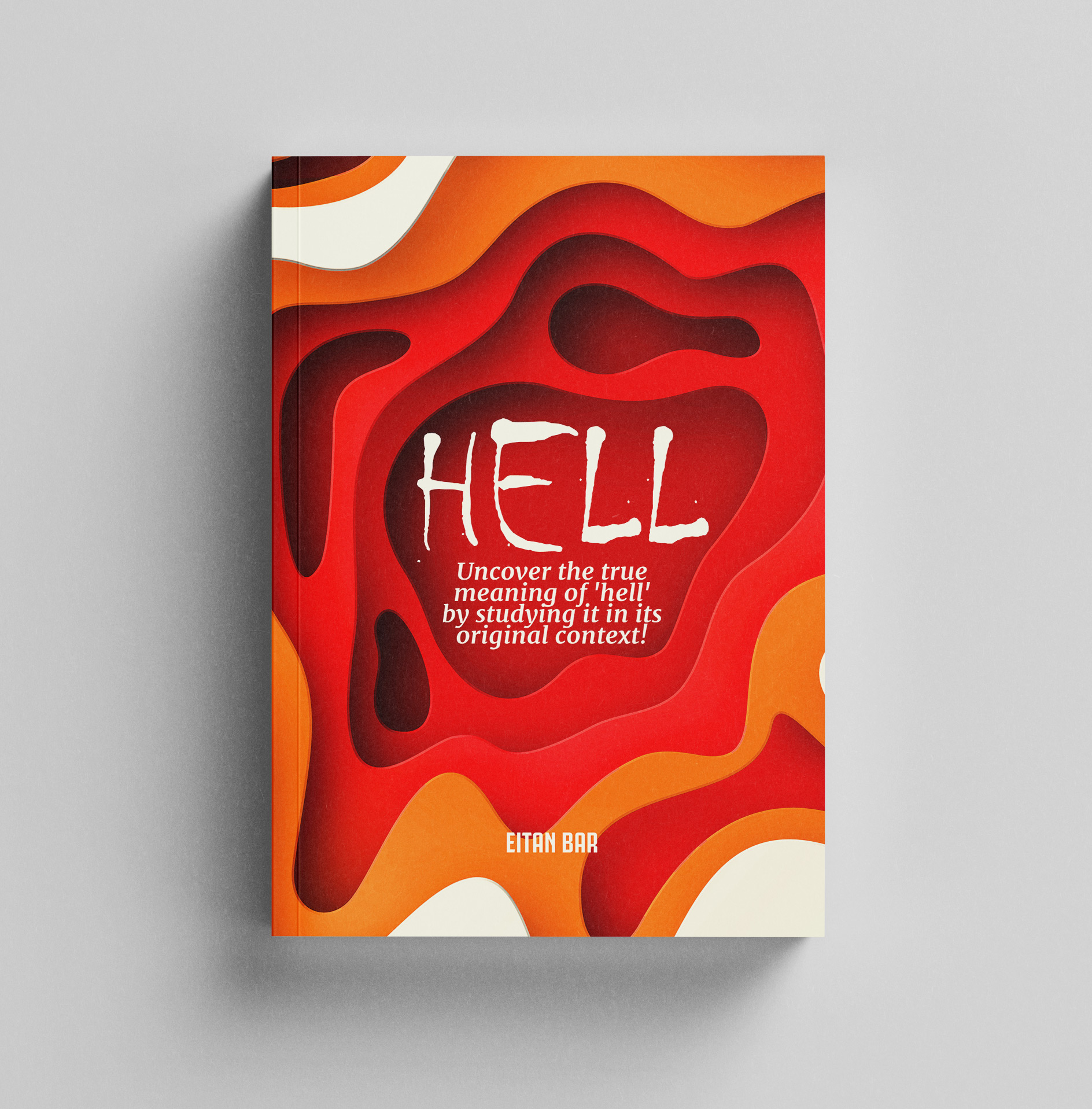
A review of HELL: A Jewish Perspective on a Christian Doctrine by Dr. Eitan Bar (325 pages, 40 chapters).
Some books argue you out of a belief. This one does something rarer. It walks you back to the place where the belief was manufactured, shows you the tools that made it, and then quietly asks whether you still want to carry it.
HELL: A Jewish Perspective on a Christian Doctrine is Dr. Eitan Bar’s most disarming and most necessary book. Eitan Bar is one of the leading voices in Christian universalism, and what makes this particular volume so effective is that he never sounds like a man trying to win. He sounds like a Jewish scholar reading his own Scriptures in his own language and gently pointing out that something got lost on the way to the English Bible.
It Opens with a Joke, and the Joke Is the Whole Argument
The preface begins with a knock-knock joke. “My name is Jesus. You must open up and let me in.” “Why should I let you in?” “So I can save you.” “Save me from what?” “Save you from what I am going to do to you if you don’t open!”
Then a single line: “Did it shock you? Excellent. I trust the book will have the opposite effect.”
That is the whole book in miniature. Bar is not interested in scandal for its own sake. He is interested in the moment a reader hears a familiar doctrine spoken out loud in plain words and realizes it does not sound like good news at all.
He also makes a distinction early that saves the reader three hundred pages of confusion. He separates “hell,” a broad doctrine with many historical interpretations, from “Hellfire,” his term for the specific Augustinian and Calvinist doctrine of Eternal Conscious Torment. He is not attacking judgment. He is attacking one particular late theory of judgment, and he says so clearly from the start.
The Translation Chapter Alone Is Worth the Book
Bar’s opening move is to show that the English Bible is not a neutral object. He offers Matthew 10:29 as his exhibit. The King James renders it as sparrows not falling “without your Father.” The New American Bible adds “knowledge.” The NET Bible, produced by a Calvinist team, inserts “will.”
One small word, and suddenly nothing happens that God did not actively intend. Bar, whose family lost members in the Holocaust, does not need to raise his voice about what that word does to a Jewish reader. He simply lets it sit there.
From that example he builds his method: watch for the anachronism fallacy, read Semitic root-based language on its own terms, and remember that more than nine hundred English translations exist precisely because translation is never neutral.
Gehenna, and the Verse Nobody Quotes
Part III is the heart of the book, and the chapter on Gehenna is its finest hour. Bar walks the reader through the Valley of Hinnom as a real place southwest of Jerusalem, the site of child sacrifice to Molech, the valley Jeremiah renamed the Valley of Slaughter, a place so saturated with shame that its name became shorthand for national disgrace. He engages the garbage dump debate honestly, notes that Francis Chan tried to bury the theory in 2011 and that a Roman-era city dump was in fact excavated in the Kidron area, and cites Radak’s twelfth-century commentary on the fires kept burning there.
Then he plays the card that should end the conversation. If Gehenna is a literal eternal fire chamber, what do we do with Jeremiah 31:40, where the whole valley of dead bodies and ashes becomes “holy to the LORD”? What about Psalm 84, where the valley of weeping becomes a place of springs?
“How, then, could Gehenna be a literal and unending Hellfire if it is destined to become holy and rejuvenated?”
That is not rhetoric. That is a text-based checkmate, and I have not seen a satisfying reply to it anywhere.
His reading of Matthew 5:27-29 is equally sharp. If lust sends a man to eternal torment, then Jesus is either demanding literal self-mutilation or He is speaking, as Jewish teachers habitually spoke, in deliberate hyperbole. Bar points out the obvious thing that somehow escapes so many pulpits: a blind man can still lust. The literal reading does not even solve its own problem.
“Olam” Does Not Mean Forever, and Israelis Already Know It
The chapter on “eternal” punishment assembles the linguistic case with real patience. The Interpreter’s Dictionary, Charles Ellicott, James Hasting, R. F. Weymouth, Campbell Morgan, all saying the same quiet thing: the biblical languages have no word for endless duration.
Then Bar does what only a native Hebrew speaker can do. He notes that in modern Israeli Hebrew, a ma’asar olam, a “life sentence,” runs twenty-five years, seventeen with good behavior. Not everlasting. He shows Jonah using olam for three days in the fish, and Isaiah using it for a desolation that lasts only until the Spirit is poured out.
His accompanying point about time is subtler and stays with you. Hebrew time is cyclical, moving in Sabbaths and moons and festivals and returns from exile. Western time is a straight line with an endpoint. Read judgment on a spiral and it is a stage. Read it on a line and it becomes a destination.
The Church Fathers Were Not On Augustine’s Side
Bar’s historical survey is generous and well documented. Clement of Alexandria: “We can set no limits to the agency of the Redeemer.” Origen and apokatastasis. Gregory of Nyssa, Macrina, Diodore of Tarsus, Didymus the Blind, Ambrose, Athanasius, Hilary of Poitiers.
The most quietly devastating citation is Basil the Great, writing in the fourth century, who observed in passing that “the mass of men say there is to be an end to punishment.” That is a hostile witness reporting what ordinary Christians of his day actually believed. Bar does not oversell it. He does not need to.
Justice, Properly Defined
Part IV is where the book moves from argument to pastoral care, and the theology gets stronger rather than softer.
Bar grounds justice in the Hebrew concept of tzedek, in the rabbinic image of God’s throne resting on the two pillars of din and rachamim, judgment and mercy, and in the Ancient Near Eastern instinct that justice exists to repair a breach rather than to inflict pain. Then he applies the Torah’s own principle of proportionality. God’s law caps punishment at forty lashes so that a human being is not degraded beyond what is just.
The question follows itself: if God’s own law forbids disproportionate punishment in earthly matters, on what basis do we attribute infinite punishment for finite sin to the Lawgiver?
The Chapter Every Pastor Should Read
Chapter 35 opens with a woman’s testimony. She burned her hand at six or seven years old, and her mother used the moment to teach her: imagine that feeling over your entire body, forever, and that is why you must not sin.
Bar’s response is theological rather than merely therapeutic. The Hebrew word for faith is also the word for trust, and you cannot truly trust someone you also fear will harm you at the slightest misstep. A faith built on existential dread is structurally unstable. It produces anxiety, scrupulosity, guilt, hypocrisy, and a religious life organized around self-preservation rather than love.
He is not guessing at this. He has clearly walked with people through it.
The Jewish Weight of the Question
Running under everything is a question that a Gentile author simply cannot ask with the same force. Under the Hellfire doctrine, the overwhelming majority of the Jewish people, including six million murdered in living memory, are being tormented forever by the God of Israel.
Bar writes as an Ashkenazi Jew who acknowledges his own longing for justice and even for vengeance, and who then sets it down. “I am certain the Jewish community would never accept and adopt this version of a Hitler-like ‘Jesus’ who perpetually burns in fire 99% of all Jews.” It lands harder than a hundred syllogisms.
Where He Ends
The final chapter walks through Isaiah 45 and Philippians 2, showing that bowing the knee and swearing with the tongue were, in the Hebrew world, acts of freely given allegiance rather than forced humiliation. Daniel’s three friends refused to bow to Nebuchadnezzar precisely because bowing meant genuine worship.
He closes with a deductive argument that is almost audacious in its simplicity. God is mighty to save. God loves the world. God wills everyone to be saved. God’s love never fails. God’s purposes cannot be thwarted. Therefore every knee will bow, and every tongue will confess.
And then, to his great credit, he steps back. “A Final Word” is a model of theological humility. He points out that the Bible never lays out a systematic doctrine of hell, that Jesus said He did not come to judge the world, and that our obsession with other people’s eternal destinies may itself be a way of taking God’s name in vain. “You may not agree with every page, and that’s fine. My hope is that this book has stretched your mind, widened your spiritual horizon, fed you with ideas to ponder, and unsettled assumptions that needed questioning. More than anything, I pray it has been medicine for your soul.”
Verdict
This is a courageous, careful, warm, and unusually readable book. Bar writes in short chapters and plain sentences, quotes his opponents at length and in their own words, footnotes everything, and never once mistakes cruelty for conviction. The scholarship is real. The pastoral instinct is stronger still.
If you were raised on Hellfire and have carried the fear quietly for years, this book will feel like a window opening. If you are a teacher or preacher who has never examined where the doctrine actually came from, it will cost you some comfortable certainties, which is the point.
Five stars. Read it slowly, and then hand it to someone who is afraid.
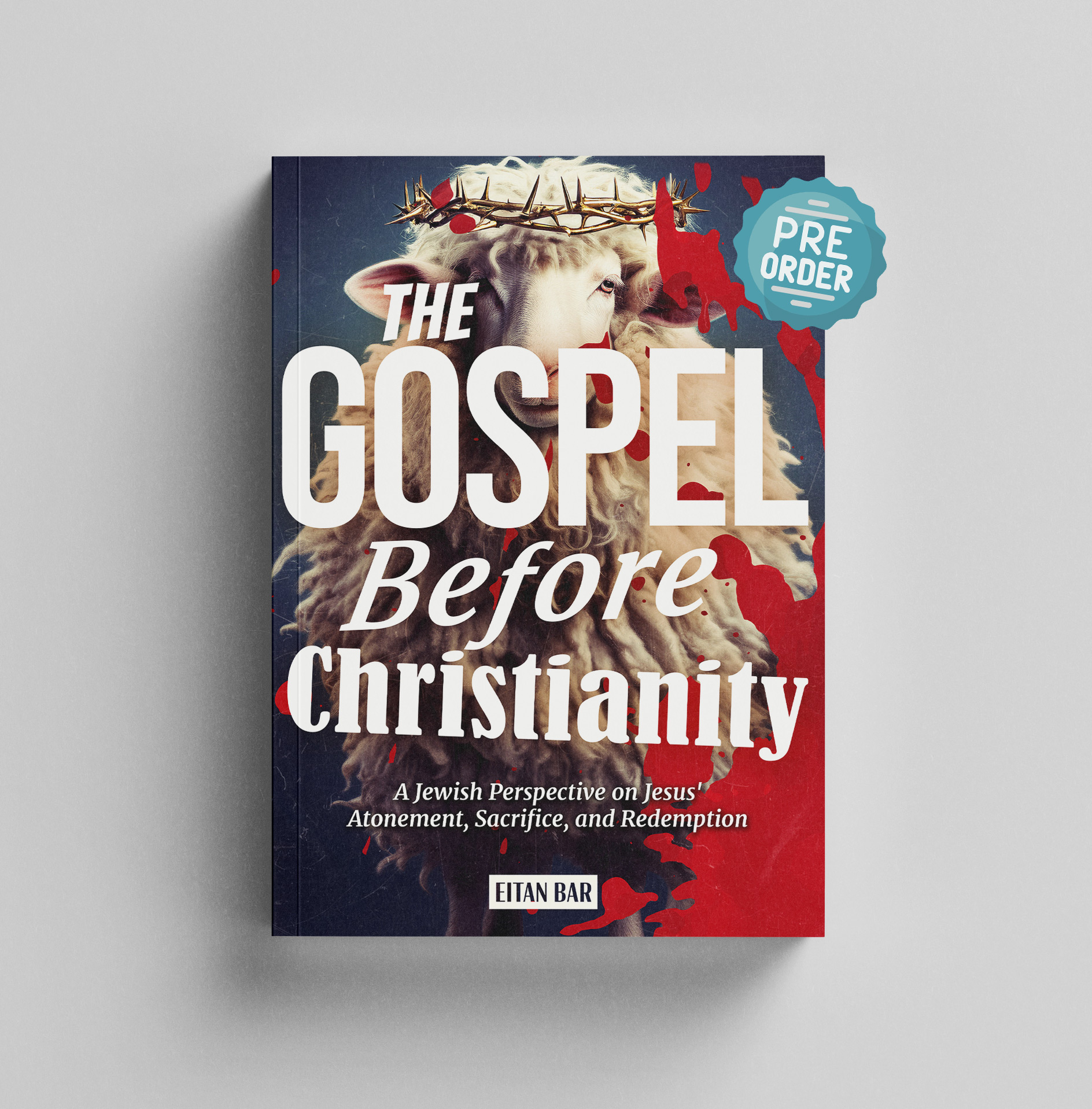
HELL: A Jewish Perspective on a Christian Doctrine by Dr. Eitan Bar is available in paperback and ebook. ISBN 9798340308795. Readers who want the wider framework behind it should follow it with his companion volume, The Gospel Before Christianity.